Do your students use concept maps? They might be missing this key link
/
If you and your students use concept mapping as a class activity or study strategy, there might be something missing.
Based on research by educators and scientists Dr. Kripa Sundar and Dr. Janell Blunt, there are two keys to an effective concept map:
Use concept maps for retrieval practice, not review or restudying
Focus on link words, not just the “nodes” or key concept inside a bubble
Learn how to make the most of concept maps with these simple research-based tips and resources, and read the short chapter about concept mapping in my book Smart Teaching Stronger Learning.
How to get a free book, audiobook, and Zoom
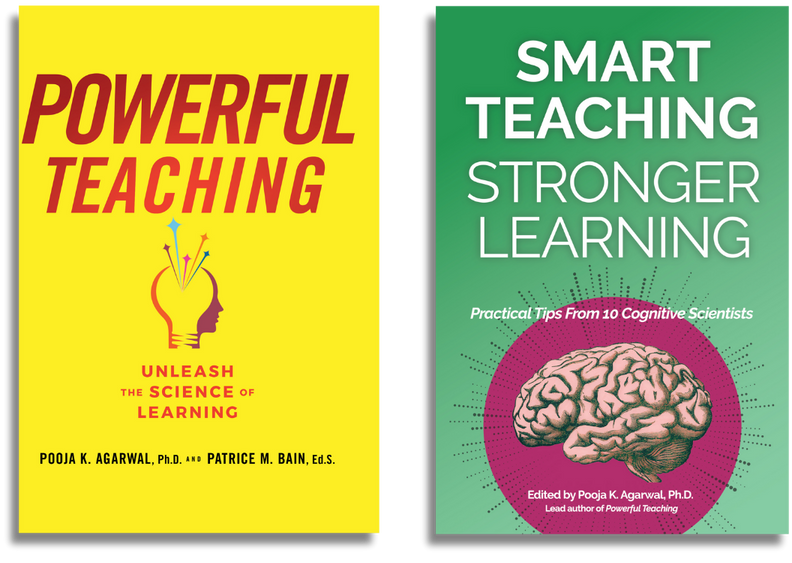
Free books: I provide professional development keynotes and workshops. Schools, colleges, and organizations who book me for in-person events receive complimentary copies of Smart Teaching Stronger Learning. Email me at ask@retrievalpractice.org for more information.
Free audiobook: Smart Teaching is now available as an audiobook, included with an Audible membership or a free trial. A big thank you to teachers from the Morton School District in Washington state for their enthusiastic nudges to make this happen. I used AI for the voice narration, and I have many mixed feelings about it. Click here to listen to a comparison of the AI voice for Smart Teaching vs. a human narrator for Powerful Teaching. Which one do you prefer? Comment below and let me know.
Free Zooms: I host free Zooms for schools and universities who have purchased 50 or more copies of Smart Teaching for their professional learning community, book clubs, and course adoptions. If this sounds like you, or if you’re interested in a bulk order discount, please contact me at ask@retrievalpractice.org.
The key to concept maps? Retrieval and linking words
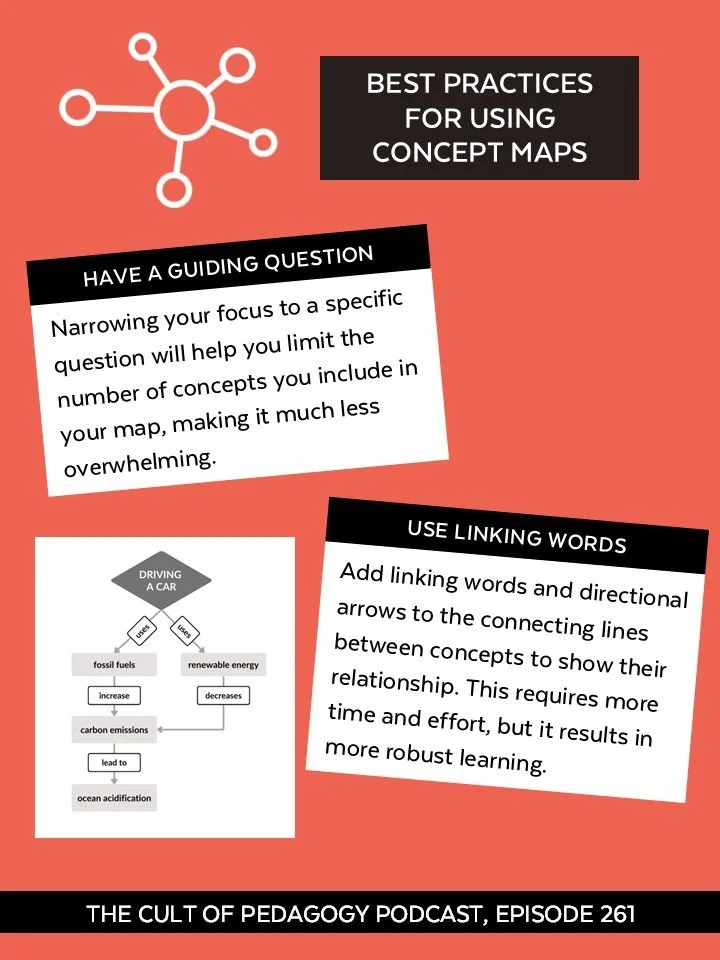
As cognitive scientist and educator Dr. Kripa Sundar explains in our book Smart Teaching Stronger Learning:
“What differentiates an effective concept map from other graphic organizers, or even a paragraph or list of responses? Teachers and learners typically focus on big concepts and nodes during learning, but often expertise comes from seeing how concepts are connected with linking words.”
In a recent podcast episode with Cult of Pedagogy, Dr. Sundar shares examples and research on how linking words are the key to effective concept maps. For example, imagine two concept maps that identify the relationship between apples and pie. One student might use the linking words “taste best in” to connect apples with pie, whereas another student might use the linking words “are a filling in” to connect apples with pie.
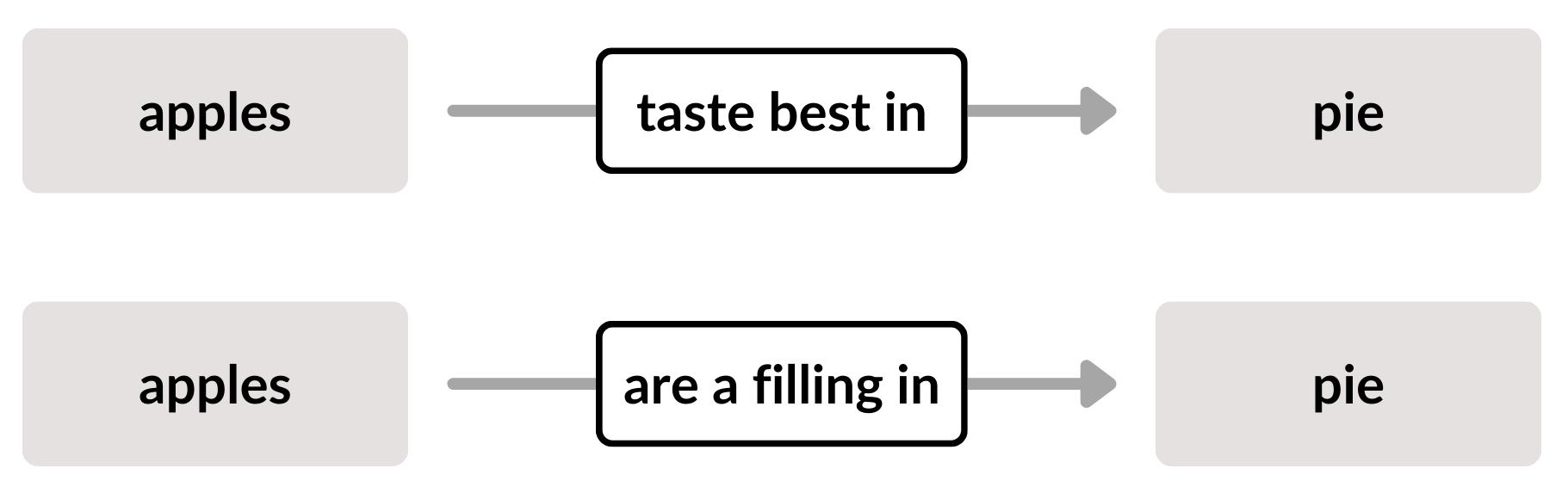
Which of these linking words is more effective for learning, taste or filling?
The more specific, the better. Often, students create a concept map with linking words that describe a general relationship rather than a specific connection. The absence of students’ linking words can highlight possible confusion or gaps in understanding, as well. A student’s response depends on context and prior knowledge, as well as the guiding question being asked.
Dr. Sundar’s key tip: When your students are concept mapping, make sure students explicitly label the relationship between the two concepts they are connecting. Concept mapping can be as easy as apple pie, but make sure you include the links.
Another key to concept maps: using concept maps for retrieval practice, not restudy or review. Here is a highly-cited research article published in Science by my colleague Dr. Janell Blunt, who spoke about concept maps at Matt Miller's online Ditch Summit (here's the video, starting around the 32-minute mark). And here is a recent research publication, comparing retrieval-based concept mapping, retrieval practice via questions, and restudy. As research has demonstrated for decades, retrieval practice significantly improves students’ long-term learning and transfer of knowledge.
Learn about Dr. Kripa Sundar

Dr. Kripa Sundar (NarayanKripa Sundararajan, she/her) is the Founder and Lead Consultant at EdTech Recharge in Irvine, California. Her boutique impact research and consulting firm supports mission-driven education leaders to execute evidence-based product strategy toward implementation and measurement at scale, including global companies across the United States, United Kingdom, Canada, Spain, Australia, and India. She earned her Ph.D. from Washington State University.
Dr. Sundar is also an adjunct professor and the author of a book for children and their caregivers, entitled How Do I Learn. She has featured articles in Edutopia and in the American Educator.
Additional resources from Dr. Sundar:
Another interview with Cult of Pedagogy on how to read academic research
A YouTube video series for teachers with even more tips
A practice guide on meta-analyses and what Hattie’s “scores” really mean

Recommended publications by Dr. Sundar:
Sundararajan, N. K., Adesope, O., & Cavagnetto, A. (2018). The process of collaborative concept mapping in kindergarten and the effect on critical thinking skills. Journal of STEM Education, 19(1), 5–13.
Sundararajan, N., & Adesope, O. (2020). Keep it coherent: A meta-analysis of the seductive details effect. Educational Psychology Review, 32(3), 707-734.
Wang, Z., Adesope, O., Sundararajan, N., & Buckley, P. (2021). Effects of different concept map activities on chemistry learning. Educational Psychology, 41(2), 245-260.